WCS Education Editorials
WCS Education Stories: Insights from Within
Discover fresh perspectives on our programs from the people who know them best — our Education team! Each month, we’ll spotlight a team member as they share their stories, experiences, and behind-the-scenes insights into the work that inspires them.
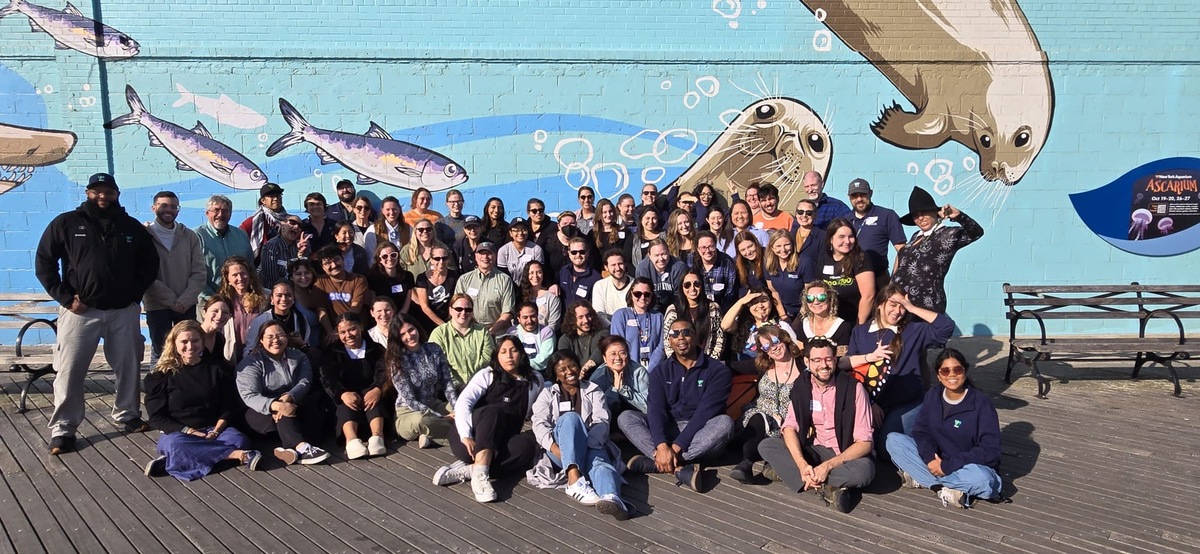
The WCS Education team at the New York Aquarium—coming together for a day of learning, teamwork, and ocean-side inspiration!
Post of the Month!
Bill Elliston, Curator of Education at Prospect Park Zoo
A Briefcase Full of Bees
Bill loves to share the ways in which we are connected to wildlife with anyone who will listen. After growing up in rural Ohio and developing a passion and curiosity for the environment, he works to remind people how we're connected to the natural world that's all around us - even in an urban setting.
The smoke floating around me smelled of campfire, grass, and burnt leaves. “Give me a puff or two here,” my father said, pointing his gloved hand at the top of the open beehive. Smoke doesn’t make honeybees “drowsy or sleepy,” as some people think. It masks their alarm pheromones and triggers an instinct to gorge on honey in case they need energy to fly away from a wildfire and find a new home.
Long before I worked at Prospect Park Zoo, I grew up in the countryside of Ohio. We had several gardens, a variety of animals, and beehives, which my father encouraged me to help tend throughout my childhood. I was fascinated by honeybees and always wanting to be in the middle of things so my dad got me a child-sized beekeeper suit. I will never forget the afternoon a persistent bee managed to get into my veil and sting me on my lower lip!
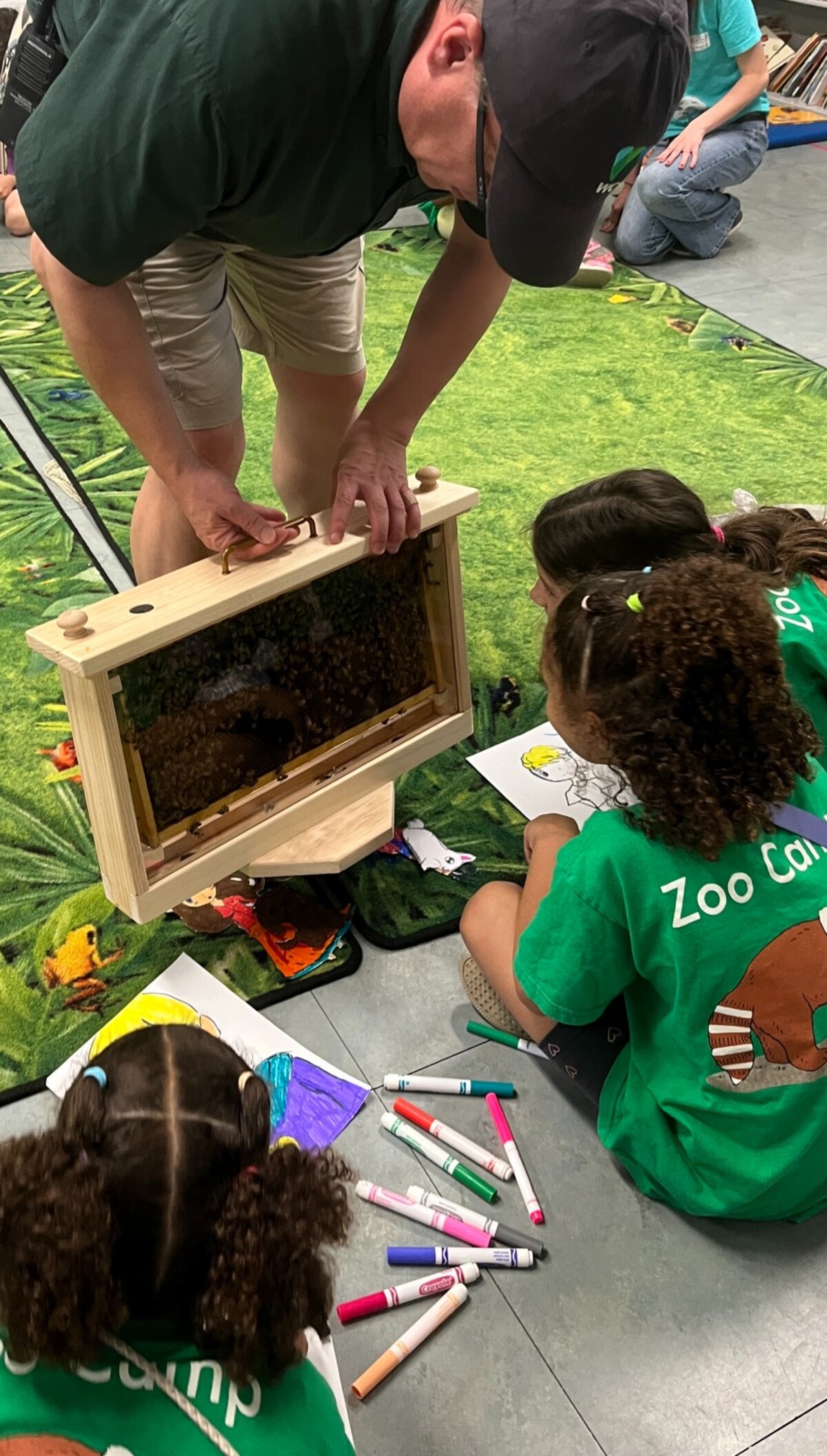
I see that same curiosity in our zoo campers. This summer I shared my excitement for bees by bringing the hive, or rather a part of it, into camp multiple times! An “observation frame” looks a bit like a wooden briefcase with clear plastic sides that carries a frame. Campers were safely inches away from the bees, watching hundreds of striped, fuzzy insects move around. They located worker bees and drones, got to see the difference between cells filled with honey, pollen, and brood (baby bees). “Oh” I would say once the questions died down, “everyone listen closely.” Voices would turn to whispers. A room full of previously boisterous children became silent, watching intently as I brought the bees around the circle of campers again. With ears close to the frame, we could hear the bees humming.
The buzz from having honeybees in camp led to discussions about native bees. Bumblebees, mason bees, and Gotham bees (which were discovered at the Brooklyn Botanic Garden) are needed for a healthy ecosystem. Native bees are highly effective pollinators, especially with wildflowers and native plants, yet they are in significant decline because of pesticide use, habitat loss, and a lack of plant diversity. Simple choices can help. Buying organic produce reduces the need for pesticides that harm bees and planting native flowers provides food and shelter. After seeing bees up-close, I’ve seen campers who were initially afraid become bee protectors, making dioramas with habitats specifically for them and watching bees closely on flowers.
This excitement has spread beyond camp. Our teen volunteers are eager to share pollinator stories with visitors, Animal Department staff have joined in taking care of the hives, and the exhibit department is adding signage along the Discovery Trail to give bees more visibility. Colleagues at other sites are considering hives of their own. Visitors are increasingly stopping along the trail to talk to us when we tend the hives, asking about what happens inside. The next time you visit, see if you can spot them and wave hello to a beekeeper.
I count myself lucky to reconnect with bees through my work and honored to continue what my father did with me, showing that conservation is concrete. Ultimately, the choices we make and the curiosity we foster are as tangible as a bee buzzing inches from your ear.
Read the Past WCS Education Stories
5 Things I love about Bronx Zoo Camp, Veronica Miller
I didn’t grow up going to camp. I don’t know exactly why, but whatever the reason, my first real experience with camp was when I started working at the Bronx Zoo. Click the title to read more.
Act Now
We Love Winter at the Wildlife Conservation Society
We know that winter can be a tough time for teachers. There are few breaks. The weather is cold and dark. And students are often pushing boundaries now they’ve settled into routines in your classrooms. Click the title to read more.
Act Now
What’s Your Zoo-dentity?
I’m Shuli and I get to work at all our five parks to study the people. We discover what people learn about science, how they connect with animals, and how their experiences inspire conservation action. Click the title to read more.
Act Now
Bringing STEM to Preschoolers Reminds Us That Everyone is a Scientist
Join Conservation Educator Mae Tesh as she explores how working with the youngest scientists among us can remind us all that at the end of the day, everyone is a scientist. Click the title to read more.
Act Now
Empowering Preschool Science Through STEM Starters
Meet Nuno Peixoto, our Coordinator of Professional Development, who has been leading this year’s STEM Starters work with preschool educators at Queens Zoo and Prospect Park Zoo. Click the title to read more.
Act Now (1).jpg)
Making Memories After Hours
As the New York Aquarium’s Overnight Program Coordinator, Samantha brings her journey full circle. She fondly remembers attending a sleepover as a young Girl Scout at a local science museum, and today creates those same long-lasting memories for other children and families at the Aquarium.
Act Now